‘If you’re writing something you don’t love, it’s not going to work’
The bestselling crime writer talks about leaving the Bar, the fragility of an author’s life, learning to abandon a bad draft and the characters who refuse to stay in their own books.
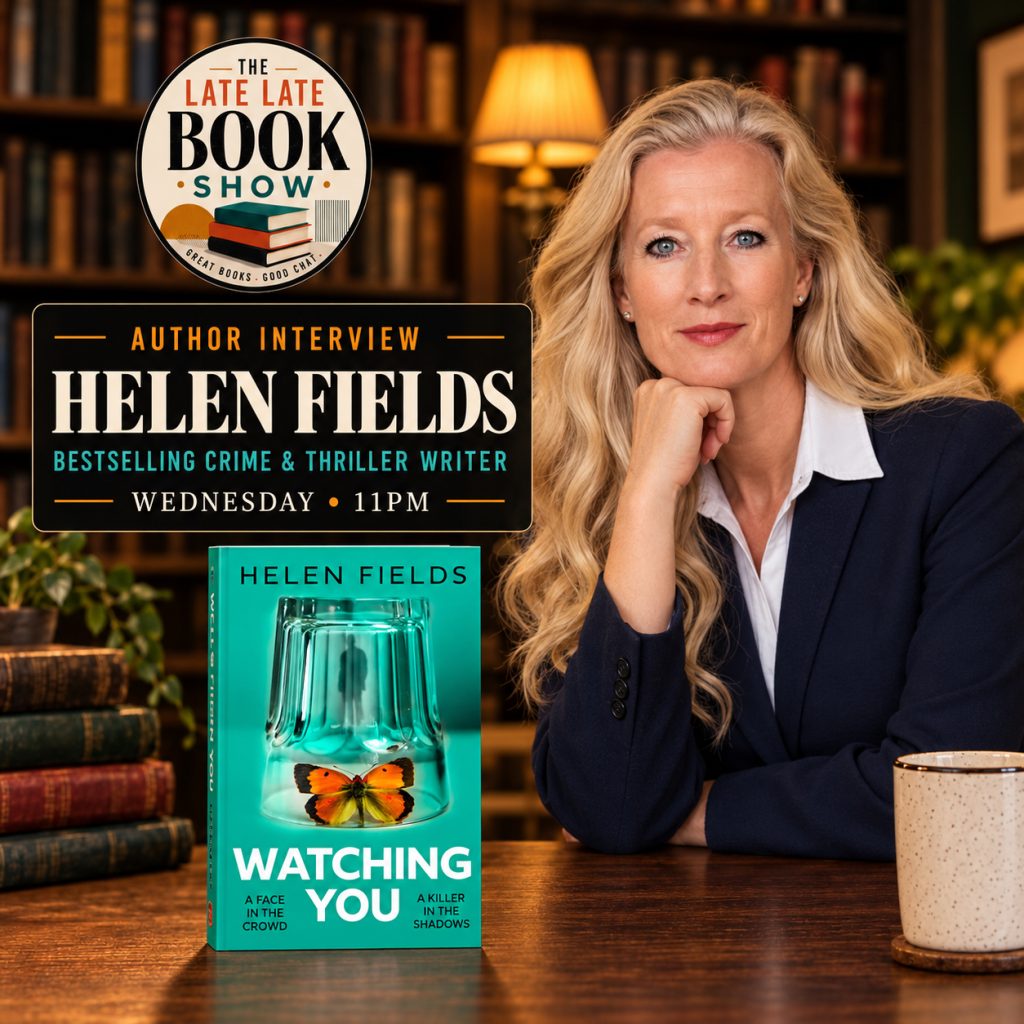
Helen Fields came to crime writing with what she calls “all the tools”. After years as a criminal and family barrister, she had stories to tell, the discipline to tell them and first-hand knowledge of the darkness that would later shape her fiction. What she did not have was a lifelong plan to become a published novelist.
“I very much got into crime writing very late in the day in terms of career,” she says. “I had some stuff to talk about, some stuff to write about, and I was really looking forward to something very, very new and very different.”
Now the author of 14 books, Fields is known for dark police procedurals and psychological thrillers, including her Edinburgh detective novels and books featuring the forensic profiler Dr Connie Woolwine. Yet when she talks about writing, success is rarely the point. What matters is the work itself — and the creative life that came with it.
“I enjoy the profession as a whole,” she says. “I enjoy the other writers, I enjoy the events, and the industry is fascinating. I feel like I’ve ended up exactly where I’m supposed to be.”
Before that came the Bar: stimulating, performative and, eventually, all-consuming. Fields was working 60-hour weeks, taking papers on holiday and cancelling plans at the last minute. After a day dealing with sexual violence, child cases and forensic evidence, she would return home and try to transform herself into an energetic mother.
“I’d have to bounce through the door having dealt with truly horrific stuff all day and try to be this bouncy, fun mum,” she says. “I wasn’t. I was faking it.”
The profession allowed no easy days. Fields remembers breaking her collarbone in the middle of a trial, going to hospital, sleeping for two hours and returning to court the following morning with her right arm in a sling. There was nobody else to take over. She apologised to the judge for looking untidy and carried on.
“It literally does not matter what is happening to you,” she says. “What you have to give up for that profession is an absolute bloodletting.”
Leaving was difficult. Like many people whose identity is bound up with their work, Fields briefly struggled to understand who she was without the title that had defined her. But her husband ran a media company, allowing her to move into a different kind of creative work while spending more time with their children. It provided a bridge between the courtroom and fiction: a place to think about stories, voice, language and persuasion.
Creativity had always been there, although it was pushed aside in a family where achievement mattered and art was treated as a hobby. As a child, Fields filled notebooks with stories, poems, songs and plays. Years later, a friend from sixth-form college reminded her of a forgotten conversation about dream jobs. Fields had said she wanted to be a writer.
Her first two novels were self-published fantasies. She now advises readers, laughing, not to seek them out. At the time, however, finishing them was the only test that mattered.
“I thought: this is fun. I’ll see if I can write a book and finish a book,” she says. “It never occurred to me that I could become a published author. I didn’t really know how people became authors.”
That changed when somebody suggested she approach literary agents. Fields found representation comparatively quickly after attending the Winchester Writers’ Festival, but the manuscript that secured her agent, a historical crime novel, did not sell. The breakthrough came with a contemporary police procedural she wrote while her agent was on maternity leave. That book became Perfect Remains.
The experience left Fields with advice that runs against the temptation to see publication as the sole measure of writing. “The reason you should start writing is because you want to tell a story,” she says, “not because you want to become a published author.”
Even the first deal brought a surprise. Fields had written Perfect Remains as a self-contained novel. At lunch, her publisher explained that the three-book contract meant a series, with the same characters continuing from one book to the next. Then came a further instruction: do not close everything down at the end of book three, in case the series continued.
“I walked in thinking: I’ve written this book, everything’s fantastic, I can breathe,” she says. “And all of a sudden people were talking to me about a long-term series I hadn’t anticipated. I remember being slightly scared.”
The fictional world expanded rapidly. Supporting characters needed histories, relationships and lives beyond the immediate plot. Fields began drawing diagrams and tracking the consequences of choices she had made without knowing they might matter six books later. Once, unable to remember whether she had ever given Sergeant Lively a first name, she appealed to readers online. They found the answer, Sam, along with the book and page on which it appeared.
Characters also developed a habit of crossing boundaries. A Connie Woolwine novel intended as an offshoot became another series. A supposedly standalone book set on Mull acquired a character from an earlier novel. Fields compares them to Japanese knotweed: once planted, they keep returning, spreading through the garden of her fiction.
The career that followed has not made writing emotionally safer. Fields describes an author’s life as a rollercoaster built on judgement: from editors, publishers, reviewers and readers. Some books arrive closer to the writer’s hopes than others. She has completed manuscripts that were never published and produced novels she felt did not equal her best work.
“All we’ve got to show for what we do is feedback,” she says. “There’s nothing tangible. It’s what people are saying about you and your writing and your product. That is a life lived on the basis of the fragility of your ego.”
There have been mornings when disappointment made returning to the desk feel almost impossible. The hardest part, she says, is accepting the vulnerability demanded by the job and then choosing to write again anyway.
Experience has at least taught her when persistence becomes counterproductive. Fields has abandoned 20,000 words four or five times. She deletes them rather than saving them for later, an act she regards as useful practice in letting go.
“You tried something and it didn’t work, and that’s OK,” she says. “If you’ve lost a month, it’s a month. It’s not the end of the world.”
The same hard-won judgement now shapes her relationship with editors. Her first response to 10 pages of notes may involve, as she puts it, throwing all her toys out of the pram, privately. Then she steps away, calms down and usually concludes that most of the suggestions are sensible. The remaining disagreements are the battles she chooses carefully, explaining not simply that she loves a passage but why it matters to the whole book.
Her most demanding recent project forced another change in method. Asked whether she could devise a novel with an unusual format, Fields initially said no: other writers had already explored documents, emails, interviews and alternative ways of telling a story. Then she sent her editor a one-line idea. The response was immediate enough that another book was moved aside.
Excitement gave way to the realisation that she now had to write it. Fields discarded almost the entire first draft and undertook three structural edits. Normally resistant to detailed planning, she found that the format required everything to be mapped to the finest degree.
“It has nearly busted my brain,” she says. “But the writing was still enjoyable.”
That distinction matters. Fields has learned to distrust a project when the pleasure disappears, however plausible the original idea may have seemed. Stopping is not failure but a form of professional honesty.
“If I’m not enjoying it, it’s because it’s not right for me,” she says. “The best thing I can do is stop writing it and start writing something that I love. If you’re writing something you don’t love, it’s not going to work.”
Her latest published novel, Watching You, brings Dr Connie Woolwine back to Edinburgh and draws together apparently unconnected murders with the devastating after-effects of stalking. It returns to subjects that have long fascinated Fields: trauma, grief, psychological syndromes and the possibility of finding hope in dark places.
Nothing in the novel is quite what it first appears to be. The same might be said of the author’s route to it: a childhood ambition pushed aside, a prestigious career relinquished and two fantasy novels written before she understood that authorship could be a profession. Fields may have arrived late, but the stories had been waiting all along.
Leave a Reply