
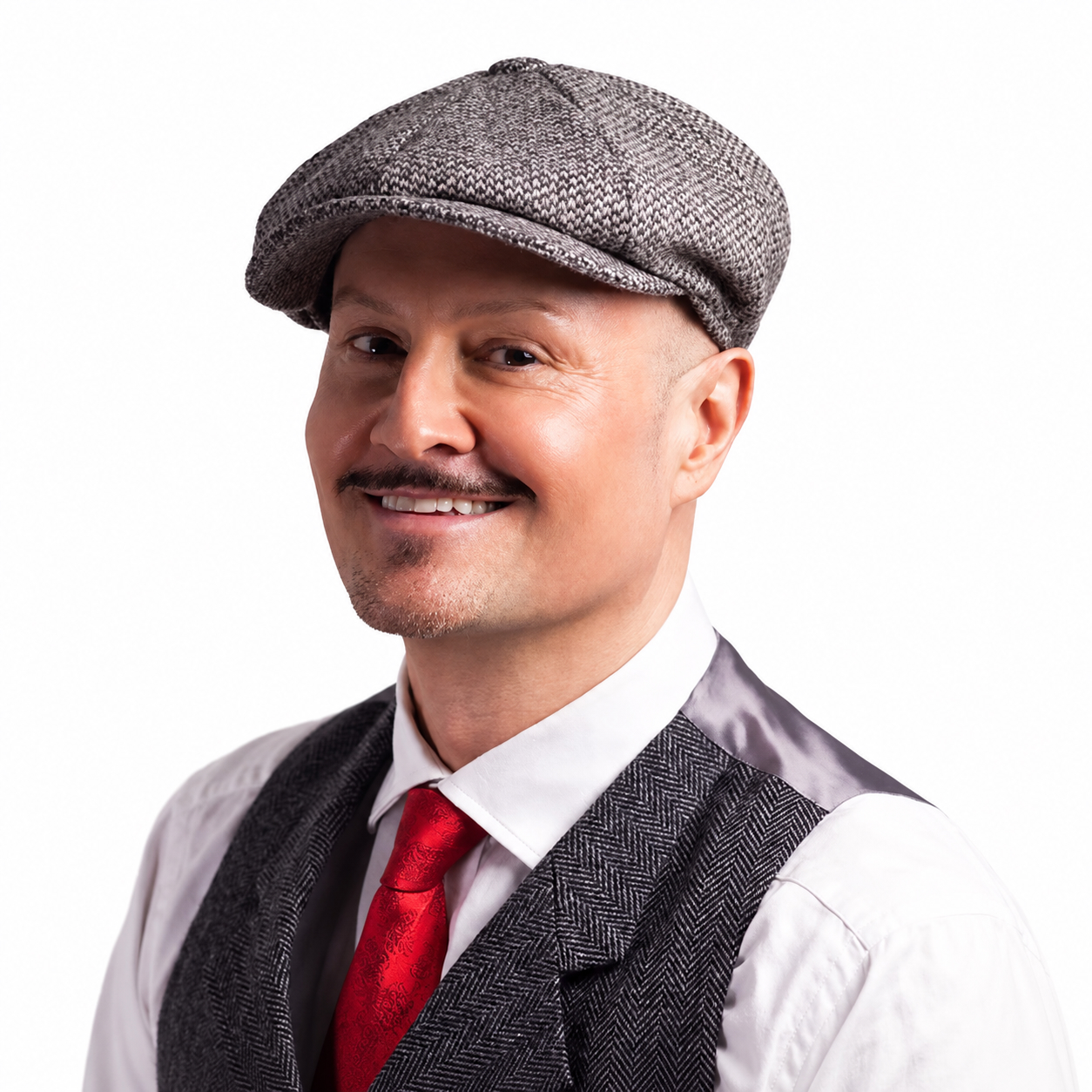
‘I began writing because I wanted to be heard’
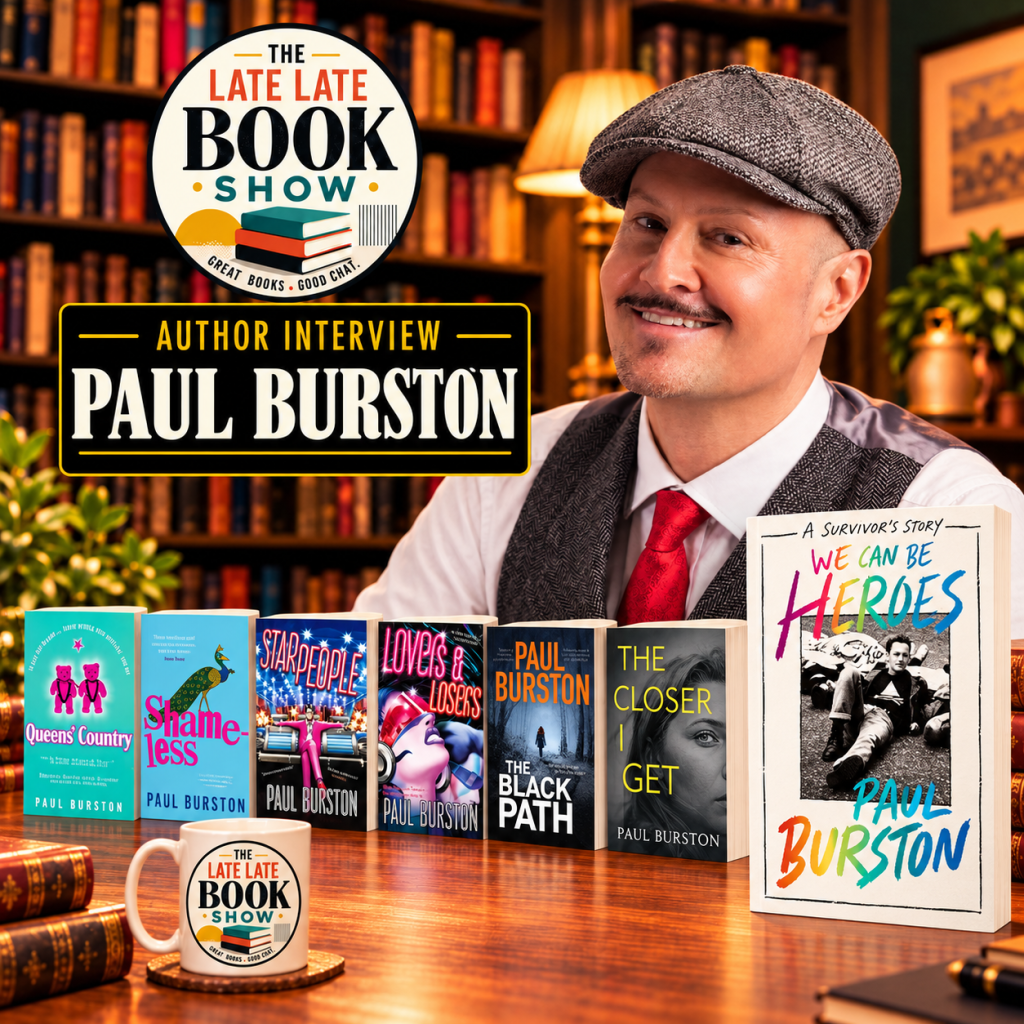
The novelist, activist and founder of the Polari literary salon talks about finding a home inside the literary establishment, the mother who taught him resilience, championing queer writers and learning to live in the moment.
When Paul Burston signed the Royal Society of Literature’s Roll Book with Lord Byron’s pen, he experienced something unfamiliar: the sensation of belonging.
Burston, novelist, editor, columnist, activist and now Honorary Fellow of the RSL, has spent much of his life regarding himself as an outsider. Finding himself welcomed into the literary establishment was gratifying, certainly, but also slightly disorientating.
“I’ve always felt like a bit of an outsider,” he says. “Publishing is a very, very middle class profession. My first editor came from a similar background to me: grew up in a small town, went to comprehensive school, went to university and then moved into publishing. By the time I was delivering my third, fourth and fifth novels, those kinds of people were much rarer. Nearly everyone I encountered came from a much more privileged background.”
Publishing, he says, has made important advances in its approach to representation, particularly around ethnicity and sexuality. But class remains “the great unspoken challenge”. For a working class writer who grew up in Bridgend, south Wales, the feeling of being on the wrong side of an invisible door proved difficult to shake.
Yet the RSL ceremony did not feel like an encounter with some remote, forbidding institution. Burston is keen to acknowledge the society’s recent efforts to broaden its membership. Looking around the room that day, he saw people he recognised.
“I was among people I recognised as my tribes,” he says. “I didn’t feel like an outsider at all. I felt seen. I felt like I was home, in a way.”
That word, seen, carries particular weight in Burston’s story. His writing life began with a desire not simply to tell stories, but to correct them: to wrest control of the narrative from those who misunderstood or misrepresented people like him.
As a young activist with the Aids Coalition to Unleash Power, better known as Act Up, he took part in direct action, chained himself to the gates of Downing Street, stormed parliament and was arrested on several occasions. He became frustrated by the gap between the careful thought and strategy behind those protests and the way they were reported.
“I decided I needed to be the person telling the story,” he says. “That’s why I became a journalist. I wanted to own the narrative and decide what was said. I began writing because I wanted to be heard.”
His first published article appeared in Capital Gay. Looking back at the young man celebrating that breakthrough, Burston knows what he would tell him now.
“Things will get better, but there will be challenges ahead. Be brave, because you’re braver than you think you are. And stick to your principles, however challenging that may be.”
It is not the same as saying he would do everything exactly as he did before. During his 20 years as a columnist at Time Out, Burston was an outspoken critic of the culture and politics around him. Writing about one’s own community, he discovered, is more personally complicated than reviewing a film or television programme. The people under discussion may also be the people standing beside you at a party.
“I alienated a lot of people,” he says. “I sometimes conflated my political stance, which was always very strong and strident because of being an activist, with the person I was talking about. I forgot that there was a person behind the statement.”
Where he felt it was necessary, he has since reached out and cleared the air. Others have done the same with him. He regards it as part of the education of a long public life: not an excuse to abandon one’s principles, but a reminder that conviction need not come at the expense of humanity.
“I try not to regret things,” he says. “I try to regret the things I didn’t do rather than the things I did.”
Burston remains alert to injustice, but his methods have changed. He is no longer the young man fastening himself to the Downing Street railings.
“I’m not as combative as I used to be,” he says. “I hate to use the word diplomatic, but you can change things from within as well as from the outside. Back then, the challenge was to get a seat at the table and be heard. It was a very different world.”
If activism gave Burston his urgency, his mother gave him his resilience. She was the first person to encourage his writing, even when she did not always understand the uncertain career he had chosen. Journalism seemed a precarious prospect. She would have preferred him to become a teacher and find something secure. But her anxiety never outweighed her pride.
“She came to my book launches and loved meeting my friends and being the queen of the ball,” he says. “She was my first role model.”
She had faced serious setbacks and mistreatment in her own life, but had no patience for self pity. Whenever Burston feels overwhelmed, he imagines what she would tell him: pull yourself together, put your best foot forward and get on with it.
“She never let things hold her back. She always got up and fought on. I learned a lot from her from a very young age.”
Her reaction to some of his early activism could, admittedly, be complicated. She was not delighted when he appeared on the news after chaining himself to the gates of Downing Street. Still more mortifying was the occasion when her young son appeared on a television programme about safer sex and discussed his erogenous nipples. Burston’s mother, who worked night shifts as a nurse, arrived at work to find her colleagues waiting.
“They said, ‘Wasn’t that your Paul on the telly last night, talking about his nipples?’ She was mortified.”
The embarrassment passed. His mother, Burston says, was always capable of reassessing her first response. When he came out, her immediate concern was what the neighbours in their small town might think. Yet she grew, adapted and remained fiercely protective of him.
She also introduced him to one of his first cultural obsessions: Coronation Street. From the age of eight or nine, he was fascinated by its sharp dialogue, backstreet dramas and formidable women, particularly Elsie Tanner. His mother, he now realises, possessed more than a touch of Tanner herself.
The connection became almost mythic when Pat Phoenix, who played Elsie, arrived in Bridgend to open an amusement arcade called Stardust. Burston, already obsessed with David Bowie and delighted by the name, joined a crowd composed largely of middle aged women. Phoenix emerged from a car with blacked out windows wearing a fur coat and sunglasses.
“It was impossibly glamorous,” he says. “It was like Hollywood royalty visiting.”
She touched him on the shoulder. He now has a phoenix tattooed on the same spot.
His mother remains a powerful presence in his life and work. Versions of her have appeared in several of his books, although he feels the loss is still too recent for him to write her story directly.
“I’m sure there’ll be a point when she comes into the books again,” he says. “If not in the autobiographical details, then in terms of her values, who she was and how she moved through life. I still have days when I wake up and think, ‘I must tell Mum this.’ Then it hits me again.”
Burston’s own fiction has moved between comedy, cultural criticism, romance and psychological suspense. His first novel, Shameless, published in 2001, was conceived as an answer to the conventions of chick lit. At the time, gay men in commercial fiction were frequently relegated to the role of loyal best friend, existing chiefly to provide emotional support and withering one liners for a straight female protagonist.
Burston deliberately reversed the arrangement. His gay character became the romantic lead, while Caroline, his female protagonist, pursued pleasure with the freedom and determination usually assigned to male characters.
“I hated the fact that these gay characters only existed as a support system for the main character,” he says. “So I flipped the roles around on purpose.”
The original suggestion from his publisher had been for “a gay Bridget Jones”, complete with a diary format. Burston quickly abandoned the structure and instead produced a multiple viewpoint comedy with a darker edge. It was the beginning of a run of books often marketed as romantic comedies, although Burston considers “bittersweet” a more accurate description.
His later move into thrillers was less a calculated reinvention than a discovery made while writing. The Black Path began under the title The Soldier’s Wife and was initially imagined as the story of a woman whose husband was serving in Afghanistan. Burston had become fascinated by the intense relationships formed between men in military settings and by the ways those attachments could resist straightforward categories of gay and straight.
As the manuscript developed, he realised he was writing a thriller. So he returned to the beginning and reshaped it.
“I often have an idea for a story and discover what it is as I’m doing it,” he says. “That’s part of the joy: going on a journey when you don’t know what the destination will be.”
It is also what makes the first draft so daunting. Burston has learned to resist the instinct to edit every chapter before moving on. His second novel, Star People, took far longer than it should have because he repeatedly stopped to polish what he had already written.
“If you don’t get a version of the story down, however rough it may be, you lose the momentum,” he says. “Now I focus on keeping going and not looking back. You can always fix it. You can’t fix a blank page, but you can fix a bad page.”
He is currently absorbed in another thriller, although he does not know when, or whether, it will be published. Recent experience has made him cautious. A completed manuscript failed to sell, the first time in his career that a full length book had not found a home.
Publishing, he says, is exceptionally difficult at present. His experience has given him an additional reason to challenge the industry’s assumptions about which books deserve an audience. Throughout his career, he has been told that his work was too gay, too niche or insufficiently literary. Queer characters were acceptable, he suggests, if the work came with the cultural blessing of being deemed “literary”. Commercial fiction was expected to place them safely at the edge.
That landscape has improved, and Burston is heartened by the number of authors now writing commercial fiction in which the main characters simply happen to be gay. But he knows how much difference an invitation, a platform or a vote of confidence can make.
That knowledge lies behind Polari, the LGBTQ+ literary salon he founded after publishing seven books without receiving a single invitation to a literary festival. Its beginnings were endearingly accidental. While promoting his novel Lovers and Losers, Burston became an occasional DJ at alternative gay venues around Soho. At the Green Carnation, a bar inspired by Oscar Wilde, he suggested interrupting the music for a reading.
The owners feared that the moment the music stopped, “all the gays would run screaming into the street”. They did not. The first gathering attracted perhaps 12 or 15 people, but it quickly developed a following. Within two years, Polari had moved to London’s Southbank Centre.
Once he had a platform, Burston felt an obligation to share it. The opening slot was reserved for an emerging writer, sometimes someone who had never been published or read in public. Older gay men had supported Burston when he was young. Polari became a way of returning the favour.
“I realised that I needed to help people up the ladder,” he says. “People had done that for me. Without them, I wouldn’t be where I am now. I needed to pay it forward.”
The salon led to the Polari First Book Prize, created to recognise writers receiving little support from mainstream publishing and the wider literary world. Burston had noticed the calibre of work appearing through small presses and self publishing, books easily dismissed by an industry still prone to equating independent publication with vanity.
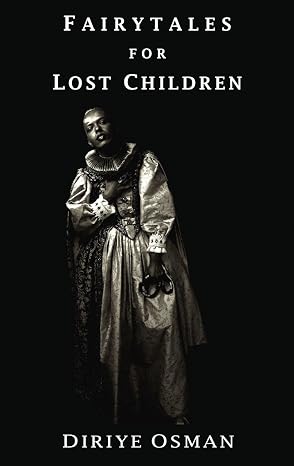
Among his happiest memories is the night Diriye Osman won for Fairytales for Lost Children. Osman had not expected to win. Burston remembers the unrestrained joy on his face. There have also been Polari events at Heaven, the London nightclub Burston first visited alone as a frightened 19 year old. Years later, he stood on its main stage hosting writers and performers.
His memoir begins with him being too scared to enter Heaven and ends with him commanding its stage. It is almost too perfect a narrative circle, the outsider becoming the host.
Polari is now receiving enough submissions to make judging across fiction, nonfiction, prose and poetry increasingly difficult. Burston would like to introduce separate categories, but expansion requires money and practical support. Much of the work remains unpaid.
“It takes up an awful lot of my time,” he says. “For it to grow, I need more support.”
He nevertheless continues to mentor emerging writers and run workshops alongside his own writing. The two strands of his work feed each other. Seeing somebody leave a session feeling excited, or watching them produce a piece of writing that surprises them, restores some of his own creative energy.
But he must also guard his time.
“I think I’d go quite mad if I wasn’t writing,” he says. “I need it to keep me in at least some semblance of being sane.”
His Substack newsletter, Live to Tell, has restored another thing he missed: immediacy. For years, his working life was divided between books, with their long journey from manuscript to bookshop, and journalism, which offered the pleasure of writing something that could appear within days. Encouraged by his friend Bernardine Evaristo, Burston finally launched the newsletter after worrying it might distract him from his fiction.
Instead, it has nourished it. The direct contact with readers reminds him why he started writing in the first place. His essays move through memory, queer history, popular culture, politics and grief. Together, they may one day form the basis of another memoir or autobiographical book.
For now, though, the novel comes first.
Life, like fiction, has become an exercise in loosening his grip on the plot. After nearly 40 years in London, Burston now lives in Hastings, where the pace is busy without being frenetic. The sea has a therapeutic quality. The town offers a flourishing artistic and LGBTQ+ community, as well as friends gathered from different stages of his life.
“When I was young, London offered me something I couldn’t have found where I grew up,” he says. “As I got older, my priorities changed. It became a question of balancing what I wanted from life.”
He admits to being something of a control freak, inclined to plan far into the future. Both writing and experience have taught him that he is happier when he lets go a little. His ideal next chapter involves a garden flat or small house, some outdoor space and, when time permits, a miniature dachshund. He has become captivated by the breed’s comic personalities and wholehearted affection.
Dogs, he observes, have no difficulty inhabiting the present. Perhaps that is part of their appeal.
Asked where he sees himself in five years, Burston does not offer a professional target or grand plan. He hopes he will be happy. Beyond that, he is trying to give his attention to what is directly in front of him: the novel, the writers he supports and the life he has built beside the sea.
“What happens will happen,” he says. “You can’t change it. All I can control is what I’m doing right now.”
Then, with the impeccable timing of a lifelong pop devotee, he reaches for the appropriate lyric.
“Whatever will be, will be, as Doris sang,” he says. “You’ve got to end on Doris, haven’t you?”
Leave a Reply