

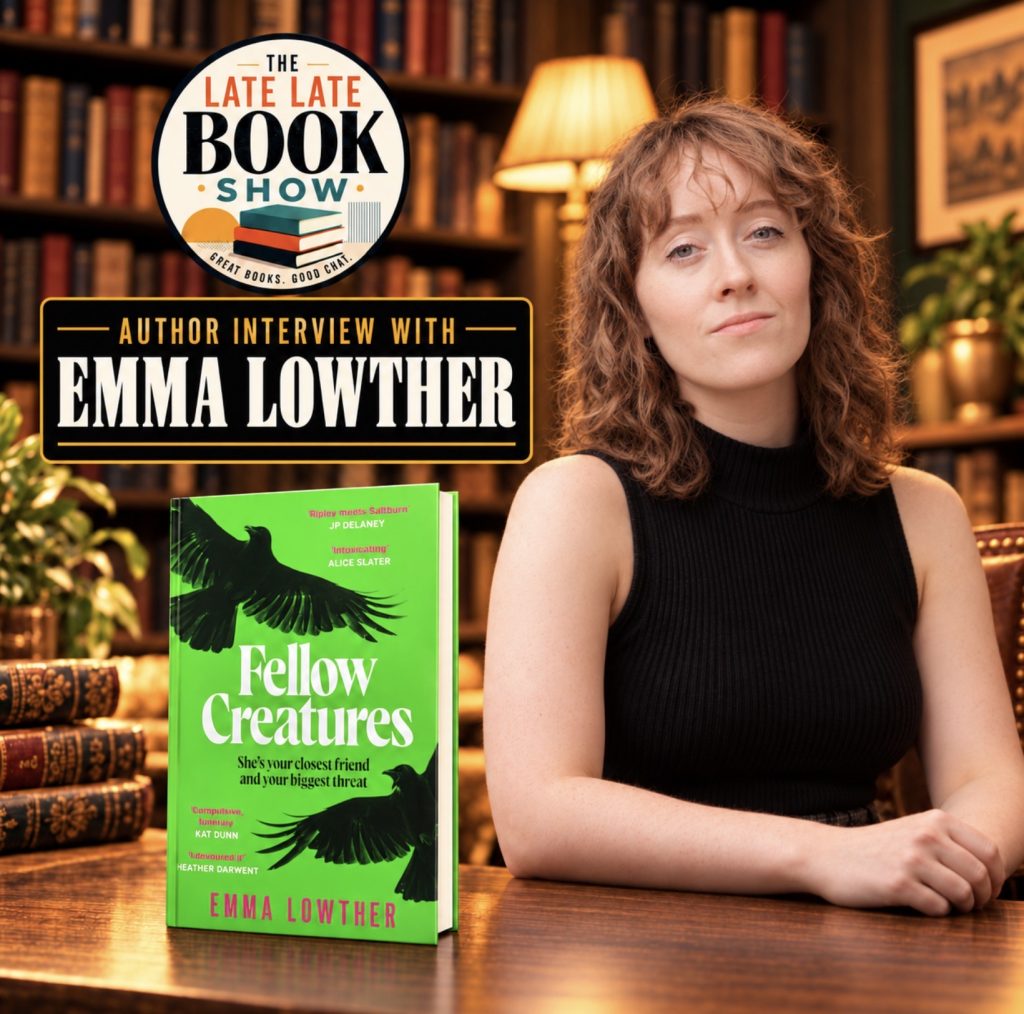
‘I wanted to find the book that only I could write’
The actor-turned-novelist drew on the class tensions, exhausting schedules and fiercely competitive atmosphere of drama school for her dark debut, Fellow Creatures. She talks about ambition, rejection, “word soup” and why every story must entertain.
Emma Lowther has recently moved to Liverpool, where one particular feature of her new home has already transformed her working life: a room of her own.
“I finally have my own office,” she says. “Just a space to shut the door and immerse myself in words. It’s so lovely.”
For a self described introvert who has spent much of her professional life acting, improvising and travelling between theatres, the quieter rhythms of writing have proved unexpectedly comfortable. Lowther still performs with the improv company she helped to establish, but these days she is happy to call herself an author.
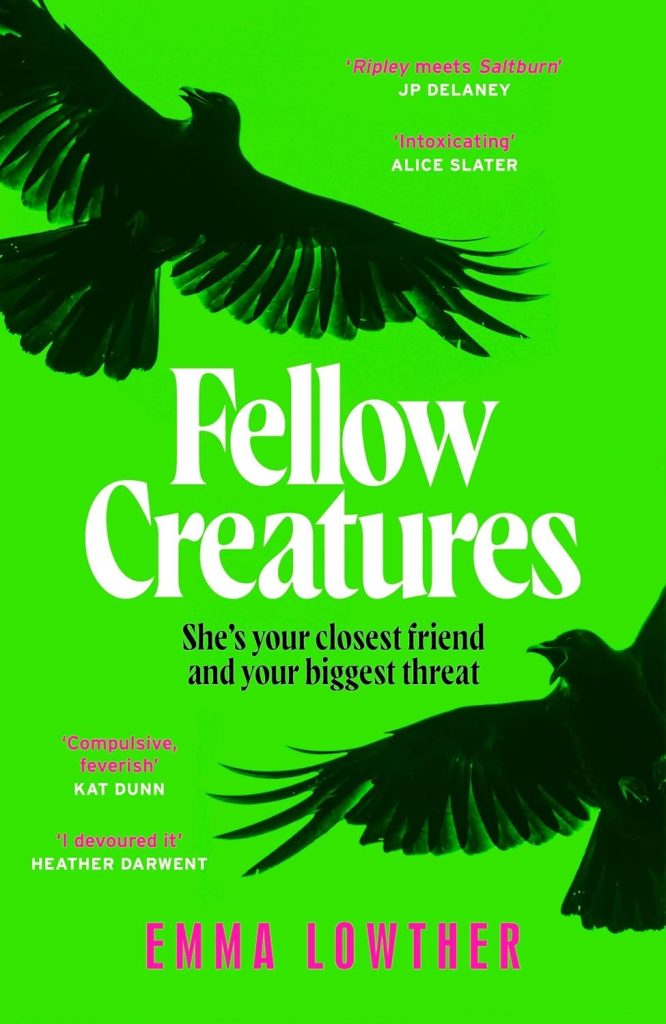
Her debut novel, Fellow Creatures, takes readers into the intense, rarefied world of an elite London drama school. It follows Shannon, a talented young woman from a working class background, and her growing fixation with Victoria, a wealthy and charismatic fellow student who appears to embody everything Shannon wants to become. Friendship, desire, envy and ambition gradually become almost impossible to separate.
Lowther knows the setting intimately. She studied at the Royal Central School of Speech and Drama, arriving at 18 without, she says, much understanding of class beyond the world in which she had grown up.
“My background was just my background,” she says. “It was my family, my friends and the people around me. There wasn’t much to compare it to.”
Drama school changed that. Suddenly, she was studying alongside people from different countries, families and levels of wealth. Some had famous relatives or connections to the industry. The distinctions revealed themselves in seemingly trivial details, including what students brought in for lunch.
“I just hadn’t encountered it before,” she says. “There were all these little differences that I started to pick up on.”
Class, she discovered, could also become part of a performer’s professional identity. Northern or working class students might be encouraged towards particular monologues and roles, strengthening characteristics the industry was presumed to find marketable.
“You were becoming entrenched in those roles that were preassigned to you,” she says.
Although the first two years of training allowed more experimentation, the final year was focused on employability. Students learned to present themselves as recognisable “types” to agents and casting directors.
That tension between discovering an identity and performing one sits at the centre of Fellow Creatures. Shannon is a consummate observer and imitator, continually trying on new versions of herself. Victoria offers not simply friendship but “a different way to exist”.
“She’s quite a shape shifting character,” Lowther says of Shannon. Victoria, meanwhile, remains largely unaware that she is at the mercy of her friend’s manipulative streak.
The relationship grew more complicated as Lowther wrote. She began with a broad idea: a story set at drama school bringing together women from very different class backgrounds. Its emotional centre emerged in a scene in which Shannon and Victoria meet in a pub on London’s South Bank.
“It’s full of all these micro details of two women sizing each other up,” she says. “They’re two young people who don’t quite know themselves, sizing up another person and deciding what front to present.”
Lowther wrote the chapter in isolation before much of the surrounding story existed. It became the moment when she understood who the women were and what they might do to one another.
The finished novel has drawn comparisons with Saltburn, The Talented Mr Ripley and Donna Tartt’s The Secret History. Lowther is delighted by the company. In fact, some of the comparisons originated in the pitch she used while seeking representation: “Saltburn meets The Secret History.”
“Fortunately, when my agent read the book, she agreed completely,” she says. “For me, those comparisons are a massive compliment.”
Lowther’s theatrical training shaped more than the setting. One of the most useful lessons she brought to fiction came from an unlikely source: clowning.
During a short course with the theatre practitioner John Wright, students were told to discard the techniques they had spent years acquiring and concentrate on the most basic responsibility of a performer, which was to hold an audience’s attention. If the class became bored, they were allowed to raise their hands and groan.
“You could be the greatest actor in the world, but if you’re boring, you don’t deserve anyone watching you,” Lowther says.
She applied the same principle to the novel. Hardbacks are expensive and readers are surrendering hours of their lives, so however psychologically complex or thematically ambitious a book might be, she believes it must offer them a good time.
“I want readers to feel it was worth their time. I’ve done that with some dark tools, but I hope the book itself is just a good read.”
Improvisation provided another rule: deal with what is happening between the people in the room. Characters talking about someone who is absent are generally less compelling than characters confronting one another directly. Lowther’s dialogue stays close to the immediate desires, discomfort and power struggles of each scene.
Her approach to suspense can be summarised in four words: “Arrive late, leave early.” Begin a scene at the moment it becomes necessary and end it before the tension drains away.
Planning the larger novel required a rather more physical method. After writing exploratory scenes, Lowther covered her living room floor with cue cards, using them to examine the story’s rising tension, turning points and final act.
“This book was going to get published and it was going to be a good read,” she says. “I refused for it not to get published.”
The conviction had been hard won. Lowther had previously begun a post apocalyptic novel, only for the real world to become alarmingly apocalyptic during the pandemic. “Read the room,” she jokes of her decision to abandon it.
She completed another manuscript while taking part in the London Writers Awards programme in 2021. It attracted some interest from agents, followed by a bruising week in which eight rejections arrived in succession. Some suggested ways she could reshape the book, but Lowther realised she did not want to force it into being something it was not.
Instead, she stepped away from writing for two months and considered her own experiences, obsessions and perspective. She asked herself what she could offer that nobody else could.
“I wanted to find the book that only I could write.”
The abandoned manuscript still mattered. It proved that she could sustain a story for 90,000 words and reach the end. The London Writers Award also gave her confidence that her work had value, even when publication remained uncertain.
Writing Fellow Creatures took almost exactly two years. Lowther refused to submit it until she felt proud enough of the work to withstand rejection.
“I wanted to be able to say, ‘Well, I know it was good,’ even if nobody wanted it.”
When she eventually sent the novel to Rachel Neely, her “dream agent”, the response was startlingly quick. Lowther emailed the opening on a Friday morning. An hour later, Neely requested the full manuscript. She read it over the weekend, met Lowther on the Monday and offered representation.
After six weeks of revisions, the novel went to publishers and attracted multiple offers. Lowther’s painstaking approach had paid off, although she is wary of presenting perfectionism as an uncomplicated virtue.
“If you’re on chapter three and being a perfectionist, stop,” she says. “You have to keep going. You have to get the draft down so that you’ve got something to edit.”
Her first six chapters of the abandoned post apocalyptic novel were, she says, beautiful. The trouble was that her attention to every sentence prevented the rest of the book from being written.
Once a draft exists, however, Lowther is delighted to become exacting. She vastly prefers editing to writing from a blank page.
“The first draft is just word soup,” she says. “You don’t know where you’re going. You might write several chapters that get slashed in the next edit. It’s climbing uphill.”
Her current routine consists of two concentrated writing periods each day. After breakfast and feeding the cat, she works for two hours, then takes a walk and has lunch before returning for a second two hour session. She has little interest in performing the role of the novelist chained heroically to a desk for eight hours.
“I need those gaps,” she says. “I need the breaks away from the desk to let things bed in. Sitting down for two hours forces you to use those two hours rather than dawdling.”
Dialogue is frequently read aloud. It helps her detect unnecessary words, unnatural formality and problems of rhythm. The instinct also made her well suited to narrating the audiobook herself. Recording it was intense, not least because the novel contains several accents, but Lowther had heard the characters’ voices throughout the writing process.
Her second novel, Dark Noise, returns to territory she knows from experience. Set across three different periods at the Edinburgh Fringe, it explores the darker side of standup comedy. Lowther has performed at the festival repeatedly with her own company and was drawn to it for the same reason she chose drama school: it is a distinctive, enclosed creative world that fiction has not yet exhausted.
Beyond that, she hopes to move gradually between forms and genres. She admires Margaret Atwood’s freedom to write whatever kind of book a particular idea demands. One day, Lowther would like to attempt an expansive family drama covering decades and many lives, something with the scale she admired in Stephen King’s The Stand, though perhaps without the supernatural terror.
“I’m a bit of a scaredy cat,” she says. “I think I’d scare myself writing that sort of thing.”
For now, the darkness of Fellow Creatures is grounded firmly in recognisable human appetites: the desire to belong, to be watched, to succeed and, perhaps most dangerously, to become someone else. Lowther may have left drama school behind, but she remains fascinated by performance, especially the performances people give when they have not yet decided who they are.
Leave a Reply