The debut novelist talks about finding menace in the Mediterranean sun, writing seven books before publication, and why success has not cured her dislike of editing
By Jonathan Welford
Rebecca Taylor McKay is getting over a virus when we speak, although it has done little to dampen her cheerfulness. Before the interview has properly begun, we have covered the alarming number of bugs going around, the virtues of air-conditioned bookshops during a heatwave, and the quiet cultural migration from Manchester to the Calder Valley.
McKay lives in Todmorden now, close to the Lancashire border, after 15 years in Manchester. Her conversation has the same appealing mixture of observation and self-deprecation that runs through her account of becoming a novelist: warm, alert and always ready to notice when the polished surface of something is concealing a more complicated truth.
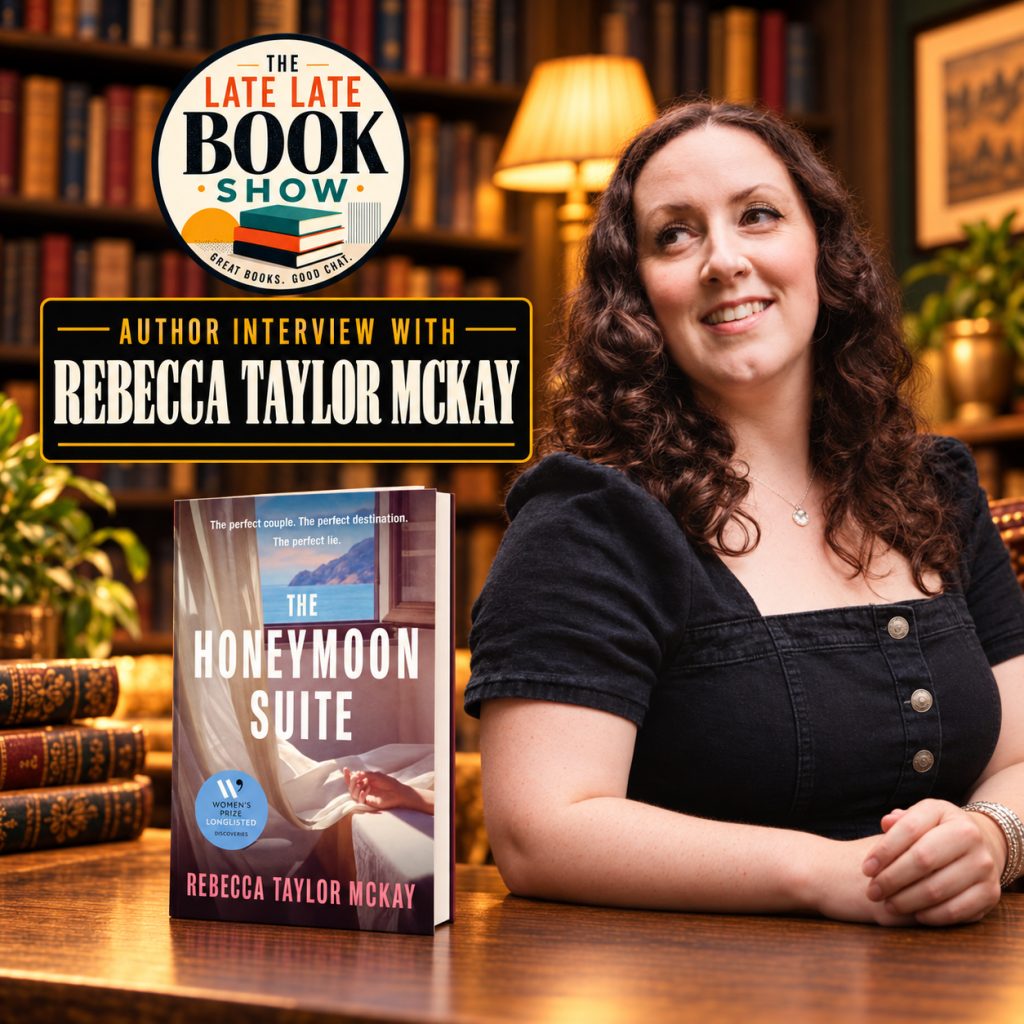
That instinct sits at the centre of her debut novel, The Honeymoon Suite, a psychological suspense story set on the Amalfi Coast during the sweltering summer of 1961. Its newlyweds, Clara and Spencer Carmichael, have arrived in Positano for a belated honeymoon. The setting is spectacular; the marriage, it soon becomes clear, is not quite so idyllic.
“As a reader and a writer – and just as a person – I’m quite nosy,” McKay says. “The more perfect and amazing something seems, the more I’m like: what’s really going on there?”
The novel began with an image rather than a plot: a couple walking together along a beautiful Mediterranean alleyway. They were physically close, but McKay sensed an emotional distance between them.
“There was something off about the image,” she says. “I was interested in what had happened before to make that the case, and why this honeymoon wasn’t as perfect as it seemed.”
Clara has grown up without wealth, security or family protection. Marriage appears to offer all three, whisking her from the typing pool into a life of privilege. But the transformation leaves her more isolated, not less.
McKay drew on her own experience as a working-class woman entering spaces in which other people’s assumptions could make her feel as though she were passing as somebody else. It is a tension she understands: the uncertain calculation of whether to explain yourself, stay silent or pretend to feel at home.
To move Clara beyond the outline of “a wife who begins to suspect her husband”, McKay paused her first draft at about 20,000 words and wrote in the voices of her four main characters. She gave them childhoods, memories and private accounts of the events that shaped them. The work would not appear directly in the finished novel, but it taught her what each character might say, what they would withhold and how they would behave under pressure.
“If you’ve really fleshed them out into rounded people, you can get to a point where you know something needs to happen for the plot, but there’s no plausible way that character would do it,” she says. “Maybe that’s the whole writing process: creating problems for yourself and then figuring out how to fix them.”
The Amalfi Coast, surprisingly, was a place McKay had never visited. The book took shape at the tail end of the pandemic, when research meant maps, photographs, online walks and travel films.
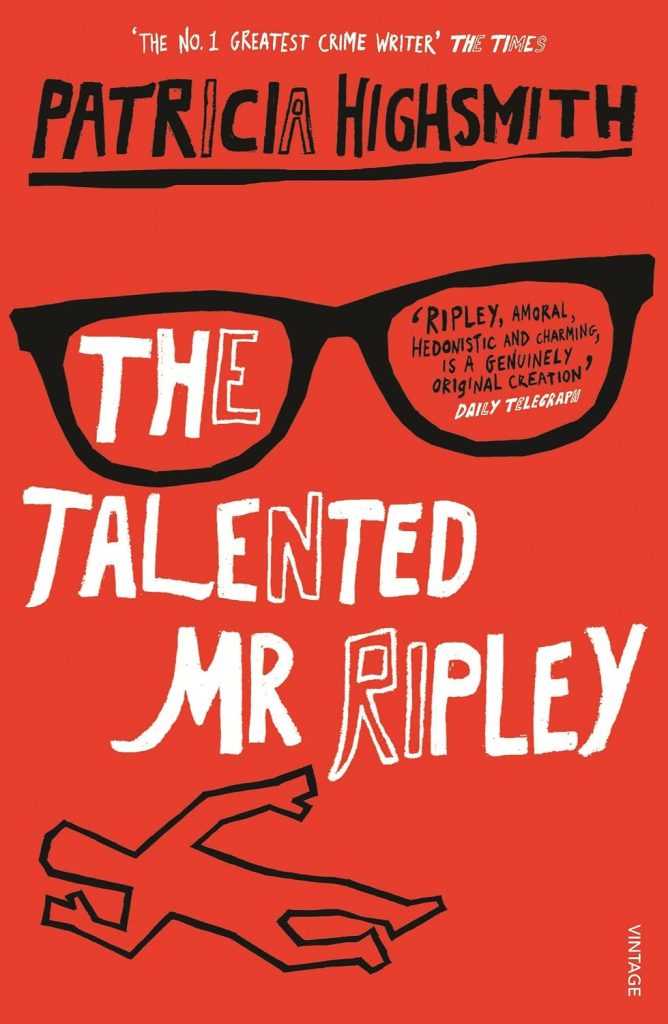
Then she watched Richard E Grant visit Positano in a documentary and heard about Patricia Highsmith staying there before writing The Talented Mr Ripley. The landscape on screen matched the one in her imagination.
McKay researched its flowers, birds and weather, absorbing footage of people walking through Positano’s streets. The distance may even have sharpened her imaginative attention. What interested her was not simply beauty, but the menace that beauty could hold.
“I’m not a huge fan of summer,” she admits, laughing at the inconvenience of repeatedly setting novels in it. “When the days stretch on and the sun is beating down, everybody starts to feel a little bit mad and strange. Temperatures are high, tempers get frayed and everything feels a little bit looser.”
In The Honeymoon Suite, dazzling light performs the work more conventionally assigned to fog, rain and dark corridors. Holiday time becomes fluid. Meals move later, afternoons dissolve into naps and ordinary routines lose their grip. The result is Gothic unease without the usual Gothic weather: isolation, secrets and uncertainty played out beneath a pitiless blue sky.
McKay grew up in Bradford, within the imaginative territory of the Brontës, and was named after Daphne du Maurier’s Rebecca , the book, her parents later assured her, rather than its famously troubling character. Du Maurier’s atmosphere and psychological tension became part of her reading life early on, even if Rebecca itself proved “not really a book for nine-year-olds”.
Old Hollywood fed the novel too, particularly Hitchcock. Asked to imagine a screen version, McKay reaches instinctively for Cary Grant and Tippi Hedren, though she would happily accept either the concentration of a film or the breathing room of a television series.
The glamour of her debut’s setting is matched by an unusually dramatic publication story. The Honeymoon Suite was the eighth full-length book McKay had completed. Before it came young-adult fiction, fantasy, contemporary romance, romantic suspense and a Christmas romcom that remains especially beloved by her mother. Some manuscripts went out to agents; others were simply finished, put aside and followed by a new idea.
“It’s not a very efficient way to write,” she says. Yet she is grateful for those unpublished books. They gave her room to experiment, to discover her voice and to become ready for the less romantic realities of publishing. “Some people write something incredible straight out of the gate. That just wasn’t me.”
Early recognition arrived when the unfinished manuscript was longlisted for the Women’s Prize Discoveries programme and shortlisted for a Northern Writers’ Award. It was the encouragement she needed to continue.
An open-submissions initiative for underrepresented writers later brought the novel to agent Laura Williams. McKay sent what she had, gave herself six weeks to complete the ending, and joined a Zoom call expecting editorial feedback. Twenty minutes into the conversation, she realised Williams was offering representation.
After an intensive summer of revisions, the novel went out to publishers. McKay had been warned that submission could take months, so she prepared sensible distractions: a new document, a new project and a newly adopted one-eyed Macedonian rescue dog.
Two days later, her agent asked for her telephone number. An editor had read the manuscript, loved it and made a six-figure pre-emptive offer for two books.
“There was definitely a surreal element to it,” McKay says.
The speed was exhilarating, but it did not make the work effortless. She had rushed the original ending and rewrote it so many times that she and her agent occasionally had to check which version they were discussing.
McKay loves beginnings: the gleam of a new idea, the freedom of a first draft, the conviction that nobody has ever thought of anything quite so good. Editing is another matter.
“I hate it,” she says, then immediately offers the conscientious author’s correction: it is valuable, necessary and makes the book better. But it also feels like work. “I’ve written it. Why do we have to keep going back and making changes?”
She writes fiction alongside freelance copywriting and family life. Her two sons are teenagers, old enough to understand why she sometimes disappears into her study, although perhaps not yet old enough to develop self-cleaning bedrooms.
She has learned not to place creative work at the bottom of a list containing paid work, parenting, shopping and housework. On weekdays, she often joins an online Writers’ Hour from eight until nine: one protected hour before the day can get away from her.
Her natural method remains cheerfully chaotic. Left alone, she says, she might reach 30,000 or 40,000 words, lose confidence, wander towards a shinier idea and return months later.
A two-book contract has imposed unfamiliar discipline. The second novel moves further back in time, to the early 1920s, where a group of young Bohemian artists rent a villa beside Lake Geneva intending to make art and write books. They also drink gin and sleep with one another.
It sounds jolly. McKay assures me that she has made it “about as unjolly as you could get”.
There are more ideas waiting: the Christmas romance, further historical suspense novels and a contemporary ghost story that is currently frightening its creator as she writes alone in the house.
McKay has no objection to a pen name if a book strays too far from what her suspense readers expect. The point is not to hide, she says, but to avoid handing somebody a cosy festive romance when they came looking for psychological darkness.
For all the fairy-tale velocity of her deal, she is candid about the uncertainty that follows publication: cancelled events, fierce competition for festival places and the strange discovery that getting an agent or a book deal does not produce a permanent feeling of having arrived.
“You just keep moving the goalposts,” she says. Each apparent finish line reveals another one.
What steadies her is less glamorous and more sustaining: writer friends from the school gates, the morning writing hour, teenage interruptions, the rescue dog who entered the house like a diva, and a growing enthusiasm for identifying birds with an app.
At 41, McKay jokes that she has chosen her middle-aged crisis: birdwatching and becoming “fully the crazy dog lady”, her clothes covered in hair and her camera roll full of canine photographs.
It is a pleasingly domestic counterpoint to the champagne shimmer and marital dread of The Honeymoon Suite. McKay may write about beautiful surfaces cracking under pressure, but in conversation she seems happiest with the opposite: the untidy, funny reality beneath the polished picture.
After seven practice novels, countless rewrites and one startling telephone call, her literary honeymoon has begun. She is enjoying it – while keeping a properly suspicious eye on the view.
Listen to the interview here
The Honeymoon Suite by Rebecca Taylor McKay is out now. McKay is due to appear as part of the Words and Music Festival in Nantwich on Saturday 17 October.
Leave a Reply